Thursday, April 28, 2016

Monster of the Week: The Devil’s Backside

Monster of the Week: The Devil’s Backside

  BY Robert Lamb / POSTED April 17, 2015
'St Wolfgang and Devil, Life of St Wolfgang' by Michael Pacher (De Agostini Picture Library) ‘Saint Wolfgang and the Devil’ by Michael Pacher (De Agostini Picture Library)
We’ve covered demons here before on Monster of the Week, but never the Devil himself. In keeping with this week’s episode on Satanic Panic, I thought we should change that. The physical manifestations of the horned one are too many and varied for one post, so let’s focus on the above specimen from Michael Pacher’s 15th century painting “Saint Wolfgang and the Devil.”
The Proof is in the Anus
Other artists may present the devil as more man than beast, but Pacher makes the Prince of Darkness as beastly as possible. This monstrous body boasts horns, fangs, antlers, bat wings, a cow’s tail, a frog’s head and emaciated  limbs. As Walter Stephens points out in “Demon Lovers: Witchcraft, Sex and the Crisis of Belief,” the depiction follows the trend of depicting demons as “a riot of corporeality.”
Stephens argues that the physical existence of demons was an important concept in 15th century Europe, salving that century’s crisis of belief while also leading to the torture and death of innocents by the tens of thousands — most of them women. The witches who admitted (under torture) to carnal knowledge of demons were providing expert testimony to the existence of the supernatural.
Biology of the Devil
So why is there a face on the devil’s butt? According to Stephens, there’s no rhyme or reason to it here other than to present the devil as corporeal as all get out.
Eyespots. (Wild Horizons/Getty) Eyespots. (Wild Horizons/Getty)
If we’re to take a biological approach, however, we might interpret the face as a mere functioning anus with eyespots to confuse enemies or draw their attention away from its delicate head. You can find eyespots in a wide variety of butterflies and fish, as well as in the wild African serval cat, the killer whale and the Indian cobra. Similarly, humans have been known to wear masks on the back of the heads to ward off tiger attacks.
Or perhaps the devil’s rear eyes are functional sight organs. Consider the example of the butterfly Papilio xuthus, which boasts two light-sensing photoreceptors in its rear. These serve the same purpose as the rear view camera in your Prius, except for mating. They allow the male P. xuthus to alignin their genitals when mating back-to-back with females.
So perhaps the devil in Pacher’s painting uses its rear eyes during its carnal encounters with witches. After all, the Osculum infame or “ritual kiss” upon a demon’s butt was a common component of witchcraft confessions, and therefore 15th-century witchcraft theory and demonology in general. Having an eye on each buttock could, in theory, aid both execution or enjoyment of the infernal rite.
Oh, the physical horrors we imagine and the atrocities we commit in the name of proving God is real…
The Osculum infame from 1608's Compendium Maleficarum. (DeAgostini/Getty Images) An Osculum infame from 1608′s Compendium Maleficarum. (DeAgostini/Getty)
Monster of the Week is a — you guessed it — regular look at the denizens is of our monster-haunted world. Sometimes we’ll focus on the cultural aspects, but mostly we’ll look at the possible science behind a creature of myth, movie or legend. Be sure to explore the Monster Gallery as well as the Monster Science video series.

Wednesday, April 27, 2016

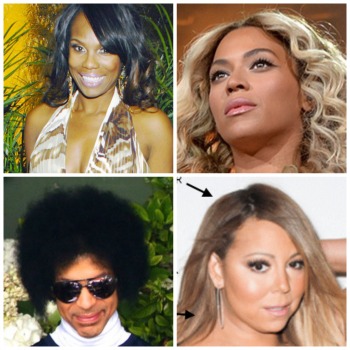
Publicist Yvette Noel-Schure on Beyonce, Mariah and Prince (Listen)

Publicist Yvette Noel-Schure on Beyonce, Mariah and Prince (Listen)

Scroll down to HEAR the interview


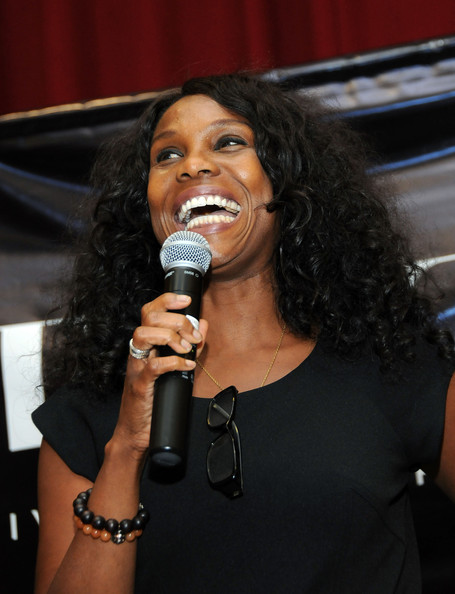
yvette noel schure, beyonce, mariah carey, prince,*Yvette Noel-Schure opened up about what it’s like to be a celebrity publicist working for Prince, Mariah Carey and Beyonce, according to YBF.
Here’s to confidentiality agreements! But Noel-Schure shared some insider details with “The Jake Sasseville Show” about representing these pop icons and working her way up through Sony.
She dished about her first day on the job and which star she found she was going to be representing… on that first day!
“[On my first day at Sony,] I was wearing a beautiful black dress. All the powerful people wore black, so I knew I had to wear black. I was ready to find a stack of things on artists no one cared about. Instead, there was one folder on my chair and it said Mariah Carey.”
Noel-Schure added, “she was the biggest music star in the world. I took the folder and ran to Larry Jenkins office… I told him someone forgot the Mariah Carey folder in my chair. Larry said Yvette, she is your client. And I need you to study up on everything.”
She continued with, “not only was Mariah Carey the biggest star in the world at the time, she was married to the CEO of Sony Music Tommy Mottola. Not only am I now responsible for the biggest star in the world but I have to report to Tommy Mottola, the husband of the biggest music star in the world and the CEO on the first day that I become a publicist having never been a publicist before.”
“It’s as if someone took me out on a lake, threw me out into the crater, and as they were pulling away, then asked Do you even know how to swim.”
yvette noel-schure
Yvette Noel-Schure
She worked with the likes of not only Beyonce, but Queen Bey during her pre-solo days as the lead singer of one of the biggest girl group, Destiny’s Child as well.
“I sat down with them (Destiny’s Child) and did makeup lessons… they were pretty advanced because Miss Tina Knowles was such a central figure in the lives of the girls of Destiny’s Child. Not just Beyonce, but Kelly who was raised in her house. LaTavia (Roberson) and LeToya (Luckett), the original two members, where the friendship blossomed in that house. They understood about hair and how they wanted to look. I knew in that moment that if Columbia Records trusted me with these young women, and if Tina and Matthew Knowles trusted me to be around these young women and knew that if they walked out of a room, they knew I wasn’t going to be shooting up a needle or smoking a blunt… I knew being a publicist was not what I needed to do. I knew I had to be a teacher and I had to be a guide and mentor.”
She added, “one of the things I know that Beyonce probably appreciates about me, especially now that she has a family… is that I always said to the girls, at the end of everything, I’m going home to my babies. It got to the point where the girls of Destiny’s Child used to mouth it to me after the interviews or press day. She’s going home to her babies.”
But not only did she work for Mariah — the biggest pop star of the 90s and Queen Bey, but she worked for the Purple One as well — calling the experience the best time of her life!
“When I did publicity for Prince for one year (the best year of my life!), I was the greatest actress that year. I never let him think I was a fan. It was very easy to talk to him which I didn’t anticipate.”
She added, “what I loved about working with Prince is he expected me to bring something to the table. “Musicology” was reaching a fan base that didn’t grow up with Prince and I thought it was time to go to those newer fans… when I convinced him to do Black Beat Magazine, the magazine I ran for all those years, not only did he say yes, Rudi Meyer (editor of Black Beat) came and spent two hours with Prince sitting and talking to him.”
She continued with, “you can’t record Prince’s voice. It was a lesson in seeing these journalists having to listen, take notes and Prince understood that he had to slow it down if he didn’t want to be misquoted.”

Tuesday, April 26, 2016

Heads of 31 Nations Declare a Zone of Peace, Commit to Uprooting Forever the Threat or Use of Force

Heads of 31 Nations Declare a Zone of Peace, Commit to Uprooting Forever the Threat or Use of Force

Proclamation of Latin America and Caribbean as a zone of peace
(Original signed by the Heads of State and Governmenent of the Community of Latin American and Caribbeans States)

The Heads of State and Government of the Community of Latin American and Caribbean States (CELAC) gathered in Havana, Cuba on January 28 and 29, 2014 at the Second Summit, on behalf of their peoples and faithfully interpreting their hopes and aspirations,
Reaffirming the commitment of member countries with the Purposes and Principles enshrined in the United Nations Charter and International Law, and aware of the fact that prosperity and stability in the region contribute to international peace and security,
Mindful that peace is a supreme asset and a legitimate aspiration of all peoples and that preserving peace is a substantial element of Latin America and Caribbean integration and a principle and common value of the Community of Latin American and Caribbean States (CELAC),
Reaffirming that integration consolidates the vision of a fair International order based on the  right  to  peace  and  a  culture  of  peace,  which  excludes  the  use  of  force  and non-legitimate means of defense, such as weapons of mass destruction and nuclear weapons in particular,
Highlighting the relevance of the Tlatelolco Treaty for the Prohibition of Nuclear Weapons in Latin America and the Caribbean establishing the first nuclear weapon free zone in a densely populated area, this being a contribution to peace and to regional and international security,
Reiterating the urgent need of General and Complete Nuclear Disarmament, as well as the commitment with the Strategic Agenda of the Organization for the Prohibition of  Nuclear  Weapons  in  Latin  America  and  the  Caribbean  (OPANAL),  adopted  by the 33 Member States of the Organization in the General Conference held in Buenos Aires in August, 2013.
Recalling the principles of peace, democracy, development and freedom underlying the actions of countries members of SICA,
Recalling the decision of UNASUR Heads of State of consolidating South America as a Zone of Peace and Cooperation,
Recalling the establishment, in 1986, of the Zone of Peace and Cooperation of the South Atlantic,
Recalling also our commitment, agreed in the Declaration of the Summit of Unity of Latin America and the Caribbean, on 23 February 2010, to promote the implementation of our own mechanisms for the for peaceful conflict resolution,
Reiterating our commitment to consolidate Latin America and the Caribbean as a Zone of Peace, in which differences between nations are peacefully settled through dialogue and negotiations or other means, fully consistent with International Law,
Cognizant also of the catastrophic global and long-term humanitarian impact of the use of nuclear weapons and other weapons of mass destruction, and the ongoing discussions on this issue,
Declare:
1.      Latin America and the Caribbean as a Zone of Peace based on respect for the principles and rules of International Law, including the international instruments to which Member States are a party to, the Principles and Purposes of the United Nations Charter;
2.      Our permanent commitment to solve disputes through peaceful means with the aim of uprooting forever threat or use of force in our region;
3.      The commitment of the States of the region with their strict obligation not to intervene, directly or indirectly, in the internal affairs of any other State and observe the principles of national sovereignty, equal rights and self-determination of peoples;
4.      The commitment of the peoples of Latin American and Caribbean to foster cooperation and friendly relations among themselves and with other nations irrespective of differences in their political, economic, and social systems or development levels; to practice tolerance and live together in peace with one another as good neighbors;
5.      The commitment of the Latin American and Caribbean  States to fully respect for the inalienable right of every State to choose its political, economic, social, and cultural  system, as an essential conditions to ensure peaceful coexistence among nations;
6.      The promotion in the region of a culture of peace based, inter alia, on the principles of the United Nations Declaration on a Culture of Peace;
7.      The commitment of the States in the region to guide themselves by this Declaration in their International behavior; 
8.      The commitment of the States of the region to continue promoting nuclear disarmament as a priority objective and to contribute with general and complete disarmament, to foster the strengthening of confidence  among nations;
We urge all Member States of the International Community to fully respect this Declaration in their relations with CELAC Member States.
In witness of the undersigned having duly signed this Proclamation in Havana, on the 29th day of the month of January of 2014, in a copy written in the Spanish, English, French and Portuguese languages.

US companies may hire Cubans on the island

US companies may hire Cubans on the island

Cubans, including athletes and artists can work and earn a salary in the United States if they hire companies
Individual travelers will not need authorization to go to Cuba on trips "people to people contact"
Cuba to use the US dollar in some international transactions

Why Barack Obama will visit Cuba

Why Barack Obama will visit Cuba

The US president spoke about the trip on his Twitter account, where he shared the document in which the reasons detailed him to visit Havana on 21 and 22 March . The full text
Credit: AP
Ben Rhodes, Deputy National Security Advisor for Strategic Communications and Speeches White House and one of the men closest to Barack Obama, who signed the document is who shared the US president on Twitter.

"In short, the US policy toward Cuba was not working. The most important thing is that our policy was not improving the lives of the Cuban people and, in many respects, the was getting worse. And that's how we got here "said the adviser to one of the crudest paragraphs of text.
"Cuba is only 90 miles from Florida, but long distance between our two countries looked much older. For more than 50 years, the US has carried out a policy of isolation and pressure to Cuba , " he says Rhodes.

An image that for over half a century seemed impossible. Cuban President and the US shake hands
The full text continues:

At the beginning of the Obama Administration, the goal was to make it easier for Cuban Americans to travel and send remittances to Cuba, because the president believes that Cuban-Americans are our best ambassadors for the Cuban people.
We later spent many months of secret negotiations organized by the Canadian government and with the support of Francisco and Vaticano.Y on December 17, 2014, President Obama announced along with the president of Cuba, Raul Castro that the United States and Cuba could begin a new chapter and take steps to normalize relations.
Since then, progress has been made ​​in opening relations between our countries. Last summer, diplomatic relations and Secretary of State John Kerry traveled to Cuba to raise the American flag on our embassy were restored.
"Progress has been made ​​in opening relations between our countries"
This diplomatic presence makes it much easier for the United States to promote interests and values ​​in Cuba, as we do in countries around the world.
We have facilitated visits to Cuba of US lawmakers, businesses and academics. Changes in policies and US regulations have allowed increased travel and increased trade between our countries.
In fact, during this period, the number of American visitors allowed to go to Cuba has increased by 54 percent, allowing greater participation from people to people. This will continue to increase, since earlier this week, United States and Cuba reached an agreement so that they can restore direct flights between our countries for the first time in over 50 years, a change that will allow up to 110 direct flights to Cuba from the United States every day.
We have seen indicators of how greater participation can improve the lives of the Cuban people. The Cuban government has taken some measures to fulfill its commitment to expand access to internet, the expansion of wireless access points and the announcement of an initial broadband connection. These are the steps that should be the basis for increased connectivity with the rest of the world and access to information for the Cuban people.

"This progress is insufficient. There is much more to do"

Yet this progress is insufficient. There is much more that can be done -for the United States and the Cuban government to advance this opening in a way that will be good for Cubans and good for the United States.
That is why President Obama is traveling to Cuba. We want to open more opportunities for US businesses and travelers to interact with Cuba, and we want the Cuban government to open up more opportunities for their people.
We believe that Congress should lift the embargo, which is to advance welfare and human rights of the Cuban people, and eliminate onerous restrictions that are intended to dictate to Americans who can and can not travel.
Our openness to Cuba has also created new possibilities for the United States in Latin America.
We have worked with Cuba and other countries to support President Santos and the Colombian people to put an end to a civil war lasting decades. After the president 's trip to Cuba, he and the first lady will travel to Argentina, a country with a new president who wants to start a new chapter in improving relations with the United States.
This is another indication that the future is bright for the United States in our own hemisphere.
READ MORE:

Obama's trip to Cuba

President of United States , Barack Obama , is preparing a trip to Cuba in March and thus will become the president in exercise of American country to set foot on the island in 80 years.

The visit to Cuba, to be held on 21 and 22 March, will be the culmination of the process of normalization of relations announced by the Cuban government and US in 2014, and the first time a US president in exercise pisa Cuban territory from the Calvin Coolidge trip in January 1928.

On that occasion, on the occasion of the Sixth Annual International Conference of American States, which was held in Havana, Coolidge was received by President of Cuba, Gerardo Machado.

Obama's visit to Cuba will take place on 21 and 22 March

Coolidge was the last president and the only one in US history who visited Cuba during his tenure as the Democrat Jimmy Carter has traveled to the island twice (2002 and 2011), but two decades after leaving the White House .

Last December, Obama had already advanced in an interview with the Yahoo portal hoped to visit Cuba in 2016, his last year in office, but that would only make the trip if conditions were to meet with dissidents on the island.

"If I visit (to Cuba), part of the deal is that I will be able to talk with everyone," Obama said in the interview, conducted on the eve of which was the first anniversary of the announcement of the beginning of the process of normalization of US relations with Cuba.

"I have made it very clear in my direct talks with President (Raul) Castro would continue contacts with those who want to broaden the scope of freedom of expression in Cuba," he said.

Obama then insisted that he was "very interested" in visiting Cuba and said he would make a decision "in the coming months."

Obama insisted he was "very interested" in visiting Cuba

"Yes, indeed, I can say with confidence that we are seeing progress in freedom and possibilities for Cubans, I would use a visit as a way of emphasizing that progress , " said the US president.

Under the restoration of relations, this week Cuba and the US signed an historic agreement on civil aviation that will allow a regular connection of commercial flights between the two countries for the first time in more than five decades.

The agreement represents a potential of dozens of daily connections back and forth, with 20 flights a day to Havana and 10 daily flights to other airports on the island, some routes for 5 decades have only been operated by charter companies, they may continue to operate as before.

After signing the agreement, the bidding process is opened for US airlines submit their applications to the Department of Transport for the routes they would like to operate, a process that US officials expect to finalize as soon as possible.

In addition, in the last year and US Cuba also reopened their embassies and signed agreements on environmental protection and to restore direct mail service.

One issue that hinders the full normalization is the economic embargo on Cuba and whose complete lifting depends on the US Congress, but Obama has taken executive action to ease travel and some business transactions.

Obama himself said the economic embargo imposed by his country to Cuba is "the legacy of a failed policy" and urged Congress to help him up, a request which reiterated on several occasions.

The visit to Cuba of President Barack Obama

The visit to Cuba of President Barack Obama

Cuba confirms its will to advance relations with the United States, based on the observance of the principles and purposes of the United Nations Charter and the principles of the Proclamation of Latin America and the Caribbean as a Zone of Peace
The President of the United States of America, Barack Obama will pay an official visit to Cuba from 20 to 22 March next.
It will be the second time a US president arrives in our archipelago. Previously only did Calvin Coolidge, who landed in Havana in January 1928. He arrived aboard a warship to attend the VI Pan American Conference, which took place in those days under the auspices of a local character infamous, Gerardo Machado. This will be the first time a President of the United States comes to an owner Cuba of its sovereignty and a revolution in power, led by its historic leadership.
This is inserted into the process started December 17, 2014, when the president of the Councils of State and Ministers of Cuba, Raul Castro Ruz and President Barack Obama, simultaneously announced the decision to restore diplomatic relations , broken by the United States almost 54 years ago. It is part of the complex process towards normalization of bilateral ties, which is just beginning and has advanced on the only possible and right field: respect, equality, reciprocity and recognition of the legitimacy of our government.
It has come to this moment as a result of the heroic resistance of the Cuban people and their loyalty to principles, the defense of national independence and sovereignty, first and foremost. Such securities are not traded on more than 50 years, they led to the current government of the United States to admit the severe damage that the blockade has caused to our population and recognition of the failure of the policy of open hostility to the Revolution. Neither force nor economic coercion, and isolation imposed on Cuba achieved contrary to its almost century forged through heroic struggles and aspirations condition.
The current process with the United States has been possible thanks to the unwavering international solidarity, in particular, governments and peoples of Latin America and the Caribbean, which placed the United States in an unsustainable isolation. "As silver in the roots of the Andes" -as expressed our national hero José Martí in his essay "Our America" ​​- Latin America and the Caribbean, strongly united, demanded the change of policy towards Cuba. This regional demand has underlined unequivocally in the Summits of the Americas in Port of Spain, Trinidad and Tobago, in 2009, and Cartagena, Colombia, in 2012, when all countries of the region demanded unanimously and categorically the lifting of the blockade and the participation of our country in the VII hemispheric meeting in Panama in 2015, which for the first time attended a Cuban delegation headed by Raul.
Since ads December 2014, Cuba and the United States have taken steps towards improvement of bilateral context.
On July 20, 2015, they were officially restored diplomatic relations with the commitment to develop them on the basis of respect, cooperation and observance of the principles of international law.
Have two meetings between the presidents of both countries as well as exchanges of visits by ministers and other contacts of senior officials took place. Cooperation in areas of mutual benefit dissimilar advances and discussion spaces, which allow a dialogue on issues of bilateral and multilateral interest, including those in which we have different conceptions open.
The president will be welcomed by the Government of Cuba and its people with the hospitality that distinguishes and will be treated with all consideration and respect, as head of state.
This will be an opportunity for the President of the United States directly appreciate a nation embroiled in economic and social development, and improving the welfare of its citizens. This town enjoys rights and can exhibit achievements that constitute a dream for many countries in the world, despite the limitations arising from its locked condition and underdeveloped country, which has earned him international recognition and respect.
World-class personalities as Pope and Patriarch Kirill Francisco described this island, in their joint statement issued in Havana in February, as "a symbol of hope in the New World". French President Francois Hollande said recently that "Cuba is respected and heard throughout Latin America" ​​and praised its resilience to the most difficult tests. The South African leader Nelson Mandela for Cuba always had words of deep gratitude: "We in Africa said in Matanzas, on 26 July 1991 we are used to being victims of other countries who want to break off our territory or subvert our sovereignty. In the history of Africa there is no other case of a people (such as Cuba) has been raised in defense of one of us. "
Obama will encounter a country that actively contributes to peace and regional and global stability, and shares with other peoples not what is left him but the modest resources available, making solidarity an essential element of its rationale being and welfare of humanity, as we bequeath Martí, one of the fundamental objectives of its foreign policy.
Also you have the opportunity to meet a noble, friendly and dignified people with a high sense of patriotism and national unity, which has always fought for a better future despite the adversities he has faced. The President of the United States will be greeted by a revolutionary people with a profound political culture, which is the result of a long tradition of struggle for true and definitive independence, first against Spanish colonialism and then against the imperialist domination of the United States ; a struggle in which its best sons have shed their blood and assumed all the risks. A people who will never back down from its defense of its principles and the vast work of the Revolution, which continues without hesitation the example of Carlos Manuel de Céspedes, José Martí, Antonio Maceo, Julio Antonio Mella, Ruben Martinez Villena, Antonio Guiteras and Ernesto Che Guevara, among many others.
This is also a town that unite historical, cultural and emotional ties with the US, whose paradigmatic figure, writer Ernest Hemingway, received the Nobel for Literature for a novel set in Cuba. A people showing gratitude to those children of the United States, as Thomas Jordan [1], Henry Reeve, Winchester Osgood [2] and Frederick Funston [3], fought with the Liberation Army in our wars for independence from Spain; and those more recently opposed the aggression against Cuba, defied the blockade, as the Rev. Lucius Walker, to bring their solidarity to our people help, and supported the return to the Homeland of the boy Elián González and the Cuban Five . Marti learned to admire Lincoln's homeland and Cutting disown [4].
It is worth remembering the words of the historic leader of the Cuban Revolution, Commander in Chief Fidel Castro Ruz, on September 11, 2001, when he said: "Today is a day of tragedy for the United States. You know well that here has never been sown hatred against the American people. Perhaps precisely because of its culture and its lack of complex, feeling completely free, with a homeland and without a master, Cuba is the country where more concerned with respect to US citizens. We have never preached any kind of national hatred, or anything similar to fanaticism, why we are so strong, because our conduct is based on principles and ideas, and treat them with great respect, they noticed this and said all Americans who visit to our country. "
This is the people who will receive President Barack Obama, proud of their history, their roots, their national culture and confident that a better future is possible. A nation that assumes with serenity and determination the current stage in relations with the United States, which recognizes the opportunities and unresolved issues between the two countries.
The visit of the President of the United States will be an important step in the process towards normalization of bilateral relations. Remember that Obama, as he did before James Carter, has been proposed from the exercise of his presidential powers, work to normalize ties with Cuba and therefore has taken concrete actions in this direction.
However, to reach the standards is a long and complex road ahead, which will require the solution of key issues that have accumulated over five decades and deepened the confrontational nature of the links between the two countries. Such problems will not be solved in the overnight, or with a presidential visit.
To normalize relations with the United States will be crucial to the economic, commercial and financial blockade, causing hardship to the Cuban people and is the main obstacle to the development of the economy of our country is lifted.
repeated President Barack Obama's position that the lock has to be removed and called on Congress to lift it must be recognized. This is also a major and growing demand for the American public, and almost unanimous international community, which in 24 consecutive occasions approved in the United Nations General Assembly Cuban resolution "Necessity of ending the economic, commercial and financial embargo imposed by the United States of America against Cuba. "
The president has taken steps to modify the application of some aspects of the blockade, which is positive. Senior administration officials have said they are studied other. However, it has not been possible to implement a good part of the measures for its limited scope, the persistence of other regulations and by the intimidating effects of the blockade as a whole, which has been harshly applied for over fifty years.
It is paradoxical that on the one hand, government action and, secondly, arrecie sanctions against Cuba, which affect the daily lives of our people.
Reality continues to show that blocking is maintained and implemented with integrity and with a marked extraterritorial reach, which has a deterrent effect for companies and banks in the United States and other countries. Examples include the multimillion continue to impose fines to US companies and banks and other nationalities to relate to Cuba; denial of service and closing financial operations of international banks in our country; and the freezing of legitimate transfers of funds to and from Cuba, even in currencies other than the dollar.
The people of Cuba hopes that the visit of the US president to consolidate its willingness to actively engage in a thorough discussion with Congress to lift the blockade and in the meantime, continues to use his executive powers to modify as much as possible its application, without legislative action.
Other issues that are harmful to Cuban sovereignty also have to be resolved in order to achieve normal relations between the two countries. The territory occupied by the Naval Base of the United States in Guantanamo against the will of our government and people, must be returned to Cuba, fulfilling the unanimous desire of Cubans for over a hundred years ago. They should be eliminated aimed to provoke destabilizing situations and changes in the political, economic and social order of our country interventionist programs. The policy of "regime change" has to be definitely buried.
It must abandon the pretense of making an internal political opposition, paid for with money from American taxpayers. You will have brought to an end to radio and television aggressions against Cuba in clear violation of international law and the unlawful use of the telecommunications policy objectives, recognizing that the end will not exert a certain influence on Cuban society, but put technology based development and knowledge.
The preferential immigration treatment given to our citizens under the Cuban Adjustment Act and the policy of feet, dry feet wet, causing loss of life and encourages illegal migration and trafficking in people and generate problems for others countries. This situation must be changed, as it would have to cancel the program "parole" for Cuban medical professionals, depriving the country of vital human resources to meet the health of our people and affects the beneficiaries of the cooperation of Cuba with nations that They need. In addition, the policy should be changed as a condition to Cuban athletes break their country to play in the leagues of the United States.
These past policies are incongruent with the new stage that the US government has started with our country. All predated President Obama, but he could modify some of them by executive decision and eliminate others entirely.
Cuba has been involved in building a new relationship with the United States in the exercise of its sovereignty and committed to its ideals of social justice and solidarity. No one can expect for it, have to give up one of its principles, give an inch in his defense, nor abandon proclaimed in the Constitution: "Economic, diplomatic with any State not can never be negotiated under aggression, threat or coercion by a foreign power ".
No can not harbor the slightest doubt about the strict adherence of Cuba to its revolutionary and anti-imperialist ideals, and its foreign policy committed to the just causes in the world, the defense of self-determination of peoples and the traditional support to our sister countries.
As expressed last Declaration of the Revolutionary Government, it is and will remain unshakeable solidarity with the Bolivarian Republic of Venezuela, the government led by President Nicolas Maduro and the Bolivarian and Chavista people struggling to follow their own path and faces systematic destabilization attempts and unilateral sanctions established by Executive Order unfounded and unjust March 2015 that was condemned by Latin America and the Caribbean. The notification issued on March 3 by extending the "National Emergency" and sanctions is a direct and unacceptable interference in the internal affairs of Venezuela and its sovereignty. That Order should be abolished and this will be a permanent and firm claim of Cuba.
As noted by Army General Raul Castro, "we will not give up our ideals of independence and social justice, nor claudicaremos in one of our principles, nor cede a millimeter in defense of national sovereignty. We will not press in our internal affairs. We have earned this sovereign right with great sacrifices and the price of the biggest risks ".
We got here, we reiterate once again to defend our convictions and because we attend reason and justice.
Cuba confirms its will to advance relations with the United States, based on the observance of the principles and purposes of the United Nations Charter and the principles of the Proclamation of Latin America and the Caribbean as a Zone of Peace, signed by the Heads of State and Government of the region, including full respect for their independence and sovereignty, the inalienable right of every state to choose the political, economic, social and cultural system without interference in any form; equality and reciprocity.
Cuba reiterates turn full readiness to maintain a respectful dialogue with the Government of the United States and develop relations of civilized coexistence. Living together does not mean having to give up the ideas in which we believe and we have brought here, our socialism, our history, our culture.
The profound differences of views between Cuba and the United States on political models, democracy, exercise of human rights, social justice, international relations, peace and global stability, among others, will persist.
Cuba defends the indivisibility, interdependence and universality of civil, political, economic, social and cultural human rights. We are convinced that it is the obligation of governments to defend and guarantee the right to health, education, social security, equal pay for equal work, the right of children and the right to food and development. We reject political manipulation and double standards on human rights, which must cease. Cuba, which has acceded to 44 international instruments in this field, while the United States has signed only 18, has a lot to say, to defend and to show.
What is in our ties with the United States, is that both countries respect their differences and create a relationship based on the benefit of both peoples.
Regardless of the progress that can be achieved in ties with the United States, the Cuban people will continue. With our own efforts and proven ability and creativity, we will continue working for the country's development and welfare of Cubans. We will not relent in demand for the lifting of the blockade that has done us so much damage and does. We persist in carrying forward the process of updating the economic and social model that we have chosen, and building a prosperous and sustainable socialism to consolidate the gains of the revolution.
A road sovereignly chosen and will surely be ratified at the Seventh Congress of the Communist Party, Fidel and Raul in victory.
This is the Cuba that will welcome President Obama respectful.


[1] Major General, Chief of Staff of the Liberation Army (1869).

[2] Commander. He fell in combat on the site Guáimaro, the October 28, 1896.

[3] Colonel gunner, on the orders of Calixto Garcia.

[4] Character in 1886 stoked hatred and aggression against Mexico.

Monday, April 4, 2016

90 billion tons of microbial organisms live in the deep .

International Monetary Fund (IMF) loans were associated with a 16.6% rise in death rates from tuberculosis (TB) in the former Soviet Union and Central and Eastern European countries between 1992 and 2002, finds a study in this week's PLoS Medicine.
The study, by David Stuckler and colleagues from the University of Cambridge, UK, and Yale University, USA, also found that IMF loans were linked with a 13.9% increase in the number of new cases of TB per year and a 13.2% increase per year in the total number of people with the disease.
Between 1992 and 2002, most of the countries studied in this analysis received IMF loans for the first time. As Stuckler and colleagues note, "According to the IMF, the objective of these programs is to achieve macroeconomic stability and economic growth...", yet a recent report from the Center for Global Development has suggested that countries receiving IMF loans may constrain spending on health and social services. For example, countries receiving IMF loans might need to reduce social spending in order to meet the targets set as a condition of the loan, and do so by placing caps on public wage bills or by privatizing healthcare services. However, previously it has not been clear whether IMF loans are actually linked to any changes in measurable health outcomes.
For their analysis, Stuckler and colleagues used data on health outcomes from the World Health Organization (WHO), and IMF data from the World Bank's World Development Indicators. They set up models to test whether entry to, and exit from, IMF programs was linked with changes in TB outcomes in these countries, while controlling for other factors that might have had an effect (such as the level of economic development, financial desperation, HIV/AIDS, and so on).
The authors also tried to understand what mechanisms might be responsible for the increase in TB death rates that they found. Using a separate set of models, the authors suggest that IMF programs are linked to an 8% drop in government spending, a 7% drop in the number of doctors per head, and lower coverage of TB control using the "directly observed treatment, short course" (DOTS) strategy recommended by the WHO. Together, these findings suggest that countries receiving IMF loans make cutbacks in their TB control infrastructure and that this might be responsible for the increase in TB death rates.
In an expert commentary on the study, Megan Murray and Gary King from Harvard University, USA, who were not involved in the study, discuss the difficulties involved in doing such research and the conclusions that can be drawn from the findings. Despite the key limitations they outline (in particular, the fact that IMF loans are not randomly assigned, but are likely given to countries which are "doing badly" economically), they conclude: "we are convinced that at least the authors went very far in testing assumptions and mitigating uncertainties, and so the study and its conclusions should be taken seriously."
Before applying these findings directly to policy, it would be important to understand whether IMF spending has an effect on health outcomes other than TB, and also to more clearly understand the possible mechanisms which link these loans to worsened health outcomes.
Citation: Stuckler D, King LP, Basu S (2008) International Monetary Fund programs and tuberculosis outcomes in post-communist countries. PLoS Med 5(7): e143. doi:10.1371/journal.pmed.0050143
medicine.plosjournals.org/perlserv/?request=get-document&doi=10.1371/journal.pmed.0050143


Read more at: http://phys.org/news/2008-07-links-international-monetary-fund-loans.html#jCp

New research links International Monetary Fund loans with higher death rates from tuberculosis

July 22, 2008
International Monetary Fund (IMF) loans were associated with a 16.6% rise in death rates from tuberculosis (TB) in the former Soviet Union and Central and Eastern European countries between 1992 and 2002, finds a study in this week's PLoS Medicine.
The study, by David Stuckler and colleagues from the University of Cambridge, UK, and Yale University, USA, also found that IMF loans were linked with a 13.9% increase in the number of new cases of TB per year and a 13.2% increase per year in the total number of people with the disease.
Between 1992 and 2002, most of the countries studied in this analysis received IMF loans for the first time. As Stuckler and colleagues note, "According to the IMF, the objective of these programs is to achieve macroeconomic stability and economic growth...", yet a recent report from the Center for Global Development has suggested that countries receiving IMF loans may constrain spending on health and social services. For example, countries receiving IMF loans might need to reduce social spending in order to meet the targets set as a condition of the loan, and do so by placing caps on public wage bills or by privatizing healthcare services. However, previously it has not been clear whether IMF loans are actually linked to any changes in measurable health outcomes.
For their analysis, Stuckler and colleagues used data on health outcomes from the World Health Organization (WHO), and IMF data from the World Bank's World Development Indicators. They set up models to test whether entry to, and exit from, IMF programs was linked with changes in TB outcomes in these countries, while controlling for other factors that might have had an effect (such as the level of economic development, financial desperation, HIV/AIDS, and so on).
The authors also tried to understand what mechanisms might be responsible for the increase in TB death rates that they found. Using a separate set of models, the authors suggest that IMF programs are linked to an 8% drop in government spending, a 7% drop in the number of doctors per head, and lower coverage of TB control using the "directly observed treatment, short course" (DOTS) strategy recommended by the WHO. Together, these findings suggest that countries receiving IMF loans make cutbacks in their TB control infrastructure and that this might be responsible for the increase in TB death rates.
In an expert commentary on the study, Megan Murray and Gary King from Harvard University, USA, who were not involved in the study, discuss the difficulties involved in doing such research and the conclusions that can be drawn from the findings. Despite the key limitations they outline (in particular, the fact that IMF loans are not randomly assigned, but are likely given to countries which are "doing badly" economically), they conclude: "we are convinced that at least the authors went very far in testing assumptions and mitigating uncertainties, and so the study and its conclusions should be taken seriously."
Before applying these findings directly to policy, it would be important to understand whether IMF spending has an effect on health outcomes other than TB, and also to more clearly understand the possible mechanisms which link these loans to worsened health outcomes.
Citation: Stuckler D, King LP, Basu S (2008) International Monetary Fund programs and tuberculosis outcomes in post-communist countries. PLoS Med 5(7): e143. doi:10.1371/journal.pmed.0050143
medicine.plosjournals.org/perlserv/?request=get-document&doi=10.1371/journal.pmed.0050143


Read more at: http://phys.org/news/2008-07-links-international-monetary-fund-loans.html#jCp
http://voxhumana-english.com/SciNews20080728.doc

The US Plan for Global Domination - Vision 2015 Plan

The US Plan for Global Domination - Vision 2015 Plan

The US Plan for Global Domination 

The Vision 2015 Plan


In July 2008, the Office of the Director of National Intelligence released a document entitled Vision 2015: A Globally Networked and Integrated Intelligence Enterprise. 
This vision is said to chart a new path forward for a globally networked and integrated Intelligence Enterprise for the 21st century (US run and operated). 

But when you read this document in the context of what has been going on today - it becomes clear that at the root of this campaign is an ultimate US goal for global: political, economic, technologic, and intellectual property - power and control.
http://www.scribd.com/doc/22620902/Vision-2015-Global-Intelligence-Enterprise


Clearly being able to mop up information from all over the planet gives the US (or any other country that can or does do it) a distinct and unfair advantage in all kinds of matters over those who do not have equal access to such knowledge. This unwarranted widespread surveillance has been at the loss of the privacy and security of information, and other human rights at home and abroad. 

Then you add in the TPP, TAFTA and TTIP trade agreements which are being negotiated in secret - these trade agreements would give the US a major economic advantage globally.  


Control over information (financial, economic, technology, innovation, energy, environment, political and military etc) coupled with major influence on the economy of countries that sign onto a free trade agreement with the US, gives the US even greater hegemonic power over the lesser countries over which it exerts hegemonic influence.

Here are a few excerpts from the first part - so you can get a drift of what it is about. But I would suggest that you download it from Scribd. (You will need a Scribd account).

"Many drivers and trends are shaping the future global environment in which the Intelligence Community must operate — demographic and social change, increased economic integration and competition, rapid technological innovation and diffusion, environmental pressures and growing energy demand, broad geopolitical changes and new forms of governance..."

“We see globalization – growing interconnectedness reflected in the expanded flows of information, technology, capital goods, services and people throughout the world – as an overarching ‘megatrend,’ a force so ubiquitous that it will substantially shape all the other major trends in the world of 2020.”...

"For the foreseeable future, we will act to prevent the next terrorist surprise, while addressing the root causes that fuel extremism. We will track the spread of technologies that enable individuals, groups, or rogue states to acquire weapons of mass destruction. We will compete with adversary foreign intelligence services to prevent exploitation of our security vulnerabilities. We will encounter deft attempts at denial and deception as we conduct our collection activities.
Finally, we will monitor the economic, military, political and ideological dynamics of regional powers to identify and warn of impending challenges."[It is probably reasonable to add "opportunities" in with the word challenges because the focus of this plan is a "decision advantage" by the US - and that is likely to apply to all challenges and opportunities]

"To these persistent threats we add a growing array of emerging missions that expands the list of national security (and hence, intelligence) concerns to include infectious diseases, science and technology surprises, financial contagions, economic competition, environmental issues, energy interdependence and security, cyber attacks, threats to global commerce, and transnational crime."

"Foremost among these challenges is the blurring of lines that once separated foreign and domestic intelligence, and the increased importance of homeland security. By necessity, we must be involved with numerous new partners in interactive relationships, but we must also respect and maintain the privacy and civil liberties of all Americans."

It is a ruse to attribute US spying as being necessary for counter-terrorism purposes. As such, it has been woefully ineffective (1 case has been found since 2001 which might be attributed to this megalithic spy complex). Why did the spying continue when it was clearly not cost effective?

It's all been about gaining the "strategic advantage" globally. Those are weasel words for gaining power and control.
It is looking like at least part of the conspiracy theorists concerns about a "New World Order" being planned may have some truth in it. I wonder who will be Emperor?

http://www.scribd.com/doc/22620902/Vision-2015-Global-Intelligence-Enterprise